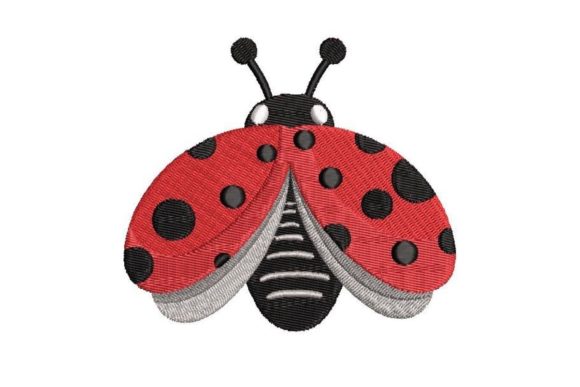
Flying Ladybug: A Designer’s Review for Small Business Merch
As an embroidery designer who has spent years digitizing and reviewing thousands of motifs, I look at every new machine embroidery design through a specific lens: commercial viability. It is not enough for a motif to be cute; it must be functional, durable, and brand-enhancing. When I first opened the Flying Ladybug file, my immediate impression was one of approachable charm. This is not a stiff, corporate logo, nor is it an overly complex artistic rendering. It sits comfortably in the sweet spot of playful professionalism, making it an ideal candidate for small business merchandise that aims to connect with customers on a personal level.
The description promises a "lovely ladybug" that adds a playful touch to accessories, and visually, it delivers. For brands operating in the lifestyle, boutique, or creative sectors, this design offers a visual shorthand for friendliness and attention to detail. However, before you rush to add it to your collection for your next production run, we need to evaluate how this digital embroidery file performs in real-world applications.
Visual Personality and Brand Alignment
In the world of Bugs themed designs, there is a risk of appearing childish or generic. Flying Ladybug avoids this trap by maintaining clean lines and balanced proportions. The aesthetic feels handmade yet polished, which is crucial for modern consumers who value authenticity. If you run a local bakery, a florist shop, or a pet grooming studio, this motif aligns perfectly with a brand identity that values warmth and community. It suggests that your business is careful, nurturing, and grounded.
For Etsy sellers and crafters, this design serves as a versatile asset. It is not so bold that it overwhelms a product, but it is distinct enough to be recognized from a distance. This balance is essential when creating small business merch where the item itself—be it a tote bag or a cap—is the canvas, and the embroidery is the accent that drives perceived value.
Real-World Applications for Custom Apparel and Accessories
The true test of any embroidery file is its versatility across different substrates. Here is how I envision Flying Ladybug performing in various commercial contexts:
- Embroidered Patches: This is perhaps the strongest use case. The design’s contained shape makes it ideal for die-cut or merrowed edge patches. These can be sold as standalone items or used to brand packaging for other products.
- Apron Embroidery: For cafes and bakeries, placing this motif on the chest pocket or lower hem of staff aprons adds a touch of whimsy without compromising professionalism. It breaks up the monotony of uniform colors.
- Cap Embroidery: Placed on the side panel or just above the brim, the ladybug acts as a subtle signature. It works well for teams or staff who want a unified look that isn’t as rigid as a full-front logo.
- Tote Bag Design: On canvas totes, the contrast of thread against fabric texture creates a premium feel. This design works well as a central focal point or as part of a larger scattered pattern.
- Product Packaging Accents: Small embroidered tags attached to handmade goods can feature this design, elevating the unboxing experience and reinforcing brand recognition.
When considering custom apparel, think beyond just t-shirts. This design shines on denim jackets, linen shirts, and even heavy-duty workwear for creative studios. The key is to let the thread colors do the work. A classic red and black combination is timeless, but experimenting with pastel threads on light fabrics can create a softer, more modern look suitable for spring collections.
Technical Considerations and Production Notes
While the design is charming, technical execution is where many small businesses stumble. As a reviewer, I must highlight areas where caution is needed. The prompt mentions that the design comes with multiple files, which is standard for professional machine embroidery design packages. However, you must verify the specific details before production.
First, check the stitch density. If the density is too high for the size, the fabric may pucker, especially on lighter materials like cotton tees or silk blends. Always test on a scrap piece of your actual production fabric. Second, consider the hoop size constraints. Ensure the design fits comfortably within your machine’s smallest hoop if you plan to produce high volumes efficiently, or confirm it scales well for larger hoops if used as a back print.
Another critical factor is stabilizer selection. For items that will undergo frequent washing, such as staff uniforms or baby clothes, a cut-away stabilizer is often safer than tear-away to prevent distortion over time. Additionally, inspect the spacing between elements. If the ladybug has fine details or thin outlines, ensure they are robust enough to survive industrial laundering without breaking or fraying.
Do not assume the file is ready for dark fabrics without adjustment. If you are embroidering on navy or black uniforms, you may need to adjust the thread colors for visibility or add an underlay stitch to prevent the fabric color from showing through. Create a printable mockup or a digital proof to show clients how the colors will interact with their chosen garment shade.
Enhancing Brand Identity and Customer Trust
Why does a simple bug matter? In the context of commercial embroidery, consistency builds trust. When a customer sees the same high-quality Flying Ladybug on your website, your packaging, and your staff’s attire, it reinforces a cohesive brand narrative. It signals that you care about the details. This attention to detail translates directly to perceived product value. A plain tote bag is worth five dollars; a tote bag with a professionally embroidered, well-executed ladybug design can command fifteen dollars or more.
Furthermore, using unique design assets like this helps differentiate your handmade product from mass-produced alternatives. In a saturated market, these small touches are what drive buyer engagement and social media shares. Customers love to photograph cute, well-made details, providing you with free organic marketing.
Final Verdict and Best Practices
Flying Ladybug is a strong contender for any small business looking to inject personality into their merchandise. It is versatile, friendly, and technically manageable if proper precautions are taken. To ensure success, follow these steps:
- Test in Monochrome: Before committing to colorful threads, stitch it out in black and white to check for clarity and definition.
- Verify Licensing: Confirm that the license included with the multiple embroidery files permits commercial use for physical goods. Never assume; always read the terms.
- Check Scale: Print the design at 100% scale on paper and place it on the intended garment to visualize the final size.
- Fabric Compatibility: Test on the exact fabric weight and texture you plan to use. Textured fabrics like terry cloth or fleece may require additional stabilization.
- Client Approval: If producing for a client, provide a physical sample or a high-resolution photo of the stitched result, not just a digital render.
In conclusion, this design is more than just a decorative element; it is a strategic tool for brand building. By treating it with the respect due to any professional embroidery asset, you can create merchandise that not only looks good but also strengthens your connection with your audience. Add it to your collection, but take the time to master its application first.