Paint Roller and Tray: A Designer’s Stitch Review
As someone who spends half their life staring at digitizing software and the other half pulling threads out of bobbin jams, I have learned to look past the glossy preview images. When I first pulled up Paint Roller and Tray on my screen, I wasn’t looking for flashiness. I was looking for utility. In the world of Work themed Embroidery, designs often fall into two traps: they are either too cartoonish to be taken seriously by professional tradespeople, or so overly complex that they turn into a bird’s nest of thread breaks on a standard home machine.
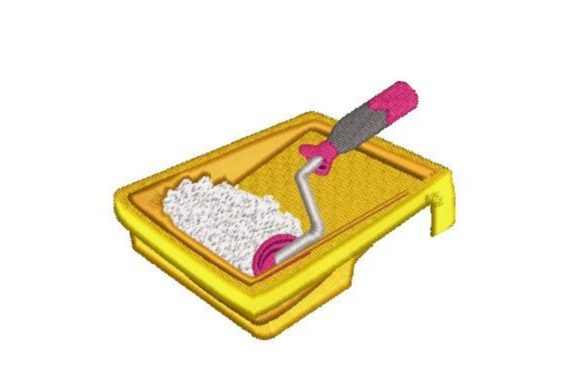
This machine embroidery design sits in a sweet spot. It feels grounded. The silhouette of the roller and tray is instantly recognizable, evoking a sense of renovation, fresh starts, and hard-earned progress. For a designer, this is gold. It isn’t just a picture of tools; it is a symbol of craftsmanship. But does it hold up when the needle actually hits the fabric? Let’s break down how this design performs in real-world scenarios, from boutique apparel to client gifts.
First Impressions and Visual Personality
The immediate mood of Paint Roller and Tray is clean and industrial-chic. It doesn’t scream for attention with neon colors or excessive detailing. Instead, it relies on strong lines and balanced proportions. The layout suggests a modern aesthetic, suitable for contemporary interiors or workwear that doubles as streetwear. The detail level is moderate—enough to define the texture of the roller nap and the depth of the tray, but not so dense that it becomes stiff.
For an Etsy seller or craft business owner, this visual personality is versatile. It doesn’t pigeonhole you into a single niche. You could market it to professional painters, DIY enthusiasts, interior designers, or even new homeowners celebrating their first renovation. The design feels intentional, which builds customer trust. When a buyer sees a crisp, well-defined image, they perceive higher value in the handmade product.
Real-World Application: The Custom Tote Test
To truly evaluate a design, you have to imagine it on a physical object. I recently considered using Paint Roller and Tray for a line of custom canvas tote bags aimed at local contractors and creative agencies. Canvas is a forgiving fabric, but it has a distinct fabric texture that can swallow fine details if the stitch density isn’t right.
In this scenario, the design shone. The broader areas of the tray provided a solid anchor for fill stitch work, while the handle of the roller offered a perfect opportunity for a clean satin stitch border. On a natural cotton canvas, using contrasting thread colors like charcoal grey or navy blue against the beige background, the design popped without looking cheap. It transformed a simple grocery bag into a branded piece of custom apparel accessory that clients were proud to carry to job sites.
Beyond totes, this design translates beautifully to sweatshirt embroidery. Imagine a heather grey crewneck with the design placed subtly on the left chest. It serves as a quiet badge of honor for anyone who takes pride in their trade. It also works surprisingly well for holiday embroidery projects, particularly for housewarming gifts or "new home" celebration packages. Pairing it with a personalized name or date turns a generic tool image into a cherished personalized gift.
Navigating Technical Challenges
However, no design is universal. There are specific situations where Paint Roller and Tray requires careful handling. If you are planning to stitch this on thin or stretchy fabric, such as a lightweight t-shirt or a baby onesie, you must be vigilant. The weight of the stitches can cause puckering if the proper stabilizer is not used. A cut-away stabilizer is likely necessary for garments that will undergo frequent washing, ensuring the design remains flat and intact.
Another consideration is the hoop size. While the description notes that this digital embroidery file comes in multiple formats, you must verify that the scaled version fits your intended hoop without losing integrity. Shrinking a design too much can merge small details, turning distinct lines into a blob of thread. Always check the smallest elements, such as the edge of the paint tray, to ensure they remain sharp at reduced sizes.
Curved surfaces present another challenge. Stitching this onto a cap or hat requires precise positioning. The flat nature of the tray might distort slightly on the curved front panel of a baseball cap. In such cases, using a backing stabilizer and testing on a scrap piece of similar material is non-negotiable. Do not assume it will look the same as it does on a flat pillow cover or tea towel.
Commercial Viability and Brand Consistency
For those selling design assets or finished goods, consistency is key. Paint Roller and Tray offers a professional look that enhances brand recognition. Whether you are creating printable mockup previews for your online store or stitching actual samples for a craft fair, the design’s clarity helps sell the product. It looks good in black and white, which is a crucial test for any versatile design. If it loses its shape without color, it lacks structural strength. Fortunately, this design maintains its form, relying on shape rather than just color contrast.
When marketing this as part of a small shop product line, consider the audience. It appeals to makers who value functionality. It fits seamlessly into collections featuring other trade tools or home improvement motifs. This thematic consistency helps build a cohesive brand identity, making your shop memorable to buyers looking for specific, niche gifts.
Practical Notes for the Embroiderer
Before you commit to a full production run, keep these practical tips in mind:
- Test on Scrap Fabric: Always stitch a sample on the exact fabric type you plan to use. Thread tension and density interact differently with denim versus jersey knit.
- Check Thread Contrast: Experiment with monochromatic schemes for a subtle, high-end look, or bold contrasts for visibility. The design supports both approaches.
- Verify Licensing: The product description mentions multiple file formats and machine compatibility, but it does not specify license terms. Before selling finished items or using this in commercial projects, confirm whether the license allows for commercial use. This is critical for protecting your craft business.
- Inspect Small Details: Zoom in on the digital file. Look for potential jump stitches or dense areas that might need manual editing in your digitizing software if you have advanced skills.
- Consider the End Use: If the item will be washed frequently, such as an apron or baby embroidery item, ensure your thread choice is durable and colorfast.
In conclusion, Paint Roller and Tray is a solid addition to any designer’s library. It bridges the gap between playful and professional, offering enough detail to be interesting but enough simplicity to be reliable. It respects the medium of Embroidery by not overcomplicating the stitch path, making it a joy to watch on the machine and a pleasure to wear or use. For the embroidery project that needs to convey competence and style, this design delivers.