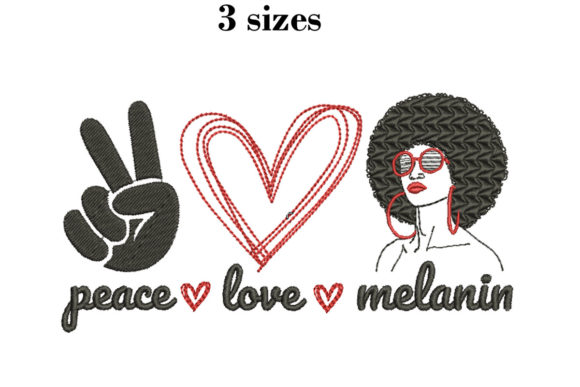
Melanin Embroidery Design: A Designer’s Review
As a designer who has spent years staring at digitized files and watching needles dance across fabric, I have developed a specific eye for what works in the real world. We are not just looking at pretty pictures on a screen; we are evaluating how a machine embroidery design will hold up under tension, thread friction, and customer scrutiny. Today, I am taking a close look at Melanin, a piece that sits firmly within the Africa category of our library. This is not just another decorative element; it is a statement piece that requires thoughtful application to truly shine.
First Impressions and Visual Personality
When I first loaded the Melanin file into my editing software, the immediate impression was one of bold confidence. The design does not shy away from its theme. It carries a modern and stylish aesthetic that feels both grounded and contemporary. For those of us creating handmade products, finding designs that balance cultural resonance with modern graphic sensibilities can be challenging. This embroidery file manages to bridge that gap effectively.
The layout suggests a strong visual personality. It is not overly cluttered, which is a relief. In the world of commercial embroidery, clarity is king. If a design is too busy, it loses impact when scaled down for a left-chest logo or blown up for a back panel. Melanin appears to have a structural integrity that allows it to breathe. The shapes are distinct, suggesting that the digitizer paid attention to the flow of the satin stitch and fill stitch areas. This attention to detail is crucial for maintaining the crispness of the final finished product.
Real-World Application: The Tote Bag Test
To truly evaluate a design, I always imagine it on a specific item. Let’s consider a custom embroidered tote bag. This is a staple for any Etsy seller or small shop owner. Canvas is a forgiving yet textured fabric. When I visualize Melanin stitched onto a natural cotton canvas, the contrast becomes the hero. The design’s lines need to stand out against the weave of the fabric.
In this scenario, the thread colors you choose will make or break the project. Because the design is rooted in themes of identity and heritage, earthy tones or high-contrast blacks and whites could work beautifully. However, if you are using a dark fabric, you must ensure the design has enough open space or light-colored stitching to remain visible. A dense block of dark thread on dark fabric will disappear, leaving only a shadow of texture. For a tote bag design intended for daily use, durability is key. The stitch path should lock down securely to withstand the weight of groceries or books without puckering the material.
Apparel and Custom Gifts
Beyond bags, this design shines on apparel. Imagine it on a heavyweight hoodie or a structured jacket. The sweatshirt embroidery market is huge right now, with customers seeking personalized items that reflect their values. Melanin fits perfectly here. It transforms a basic garment into a personalized gift that carries weight and meaning.
For custom apparel, placement is critical. On a cap, the curved surface can distort complex designs. Since Melanin has a strong central focus, it could work well on the front panel of a dad hat, provided the width fits within your standard hoop. However, always check the dimensions. If the design is too wide, it will wrap around the curve and look distorted. On a t-shirt, you must be mindful of stitch density. Too many stitches on a thin jersey knit will cause the fabric to pucker and feel stiff against the skin. A lighter touch, perhaps utilizing more running stitch outlines rather than heavy fills, would be ideal for softer garments.
Navigating Technical Challenges
While Melanin is versatile, it is not without its technical demands. As an experienced reviewer, I must point out where caution is needed. First, consider the hoop size. If you are working with a 4x4 inch hoop, you may need to resize the design. Resizing can alter stitch density, so always test on scrap fabric first. Never assume a resized file will stitch out perfectly without adjustment.
Textured fabrics present another challenge. If you are stitching on a thick towel or a fuzzy fleece, the details of the design might get lost in the pile. In these cases, increasing the stitch count slightly or using a contrasting underlay can help define the edges. For stretchy fabrics like spandex blends, a cut-away stabilizer is non-negotiable. The tension of the embroidery machine can distort stretchy materials permanently if they are not properly supported.
Dark fabrics require special attention to thread choice. If you are stitching Melanin on black denim, ensure your top thread has a slight sheen or brightness to catch the light. Matte threads on matte black fabric can look flat and uninteresting. Conversely, on light fabrics, ensure your bobbin thread matches the top thread or the fabric to avoid visible dots of contrasting color peeking through the back.
Value and Brand Consistency
For craft business owners, the design you choose reflects your brand. Using a high-quality, culturally relevant design like Melanin signals to your customers that you care about representation and quality. It adds perceived value to your small shop product. When a customer sees a well-executed embroidery piece, they trust the maker. They see professionalism.
This design also works well for holiday gifts or boutique branding. It is not seasonal, which means it has longevity in your catalog. You can use it year-round for birthdays, celebrations, or self-care purchases. For digital product sellers, offering this as part of a curated collection of design assets can attract buyers looking for meaningful, ready-to-stitch files. Always remember to check the licensing terms. If you are selling finished items, ensure your license covers commercial use. If you are selling the digital file itself, confirm that redistribution is permitted.
Practical Designer Notes
- Test on Scrap: Always run a test stitch on the same type of fabric you plan to use for the final product. This reveals tension issues and color clashes before you ruin good material.
- Check Contrast: View your design in black and white on your screen. If the details disappear in grayscale, they will likely lack definition in real life.
- Stabilizer Matters: Do not skimp on stabilizer. For caps, use a stiff backing. For towels, use a tear-away topped with water-soluble film to prevent sinking.
- Thread Quality: Use high-quality polyester or rayon thread. Cheap thread breaks frequently and lacks the luster that makes embroidery look premium.
- Verify Dimensions: Measure your hoop and your garment placement area. Ensure Melanin fits comfortably without hitting seams or zippers.
In conclusion, Melanin is a strong contender for your next embroidery project. It offers a blend of style and substance that appeals to a wide audience. Whether you are creating a baby embroidery item, a rugged backpack accent, or a delicate pillow cover, this design holds up under scrutiny. Just remember that the magic lies in the execution. Respect the fabric, respect the machine, and let the design speak for itself. With careful preparation and a keen eye for detail, you can turn this digital file into a tangible piece of art that resonates with anyone who sees it.